


How to Prepare for Rising Prices and Shortages — Without Going Extreme
Most conversations about climate change focus on the wrong question.
People argue about whether it is real, how bad it is, who caused it, and which solution is best.
Those are important questions for scientists and policymakers.
But for most people the more urgent question is simpler:
What do I actually do — given what is already happening to my grocery bill, my water supply, and my energy costs?
Water is becoming harder to rely on in many places. Food prices are rising faster than incomes in countries across every income level. Energy systems are becoming unstable. Extreme weather is already disrupting daily life.
This is not theory. It is already visible.
And the answer is not to become a prepper. Not to go off-grid. Not to build a bunker or move to the countryside.
Learning how to prepare for rising prices and shortages means five simple practical steps — available to anyone, in any city, at almost any income level — that make you slightly less vulnerable when systems you currently depend on completely start showing stress.
This article covers exactly that. Nothing extreme. Nothing expensive. Just practical.
What Is Already Happening — And Why It Matters
You do not need to wait for a future disaster to feel the effects. They are already arriving through grocery bills, utility costs, and news about water shortages in cities that looked perfectly normal six months ago.
Food prices are still expected to rise in 2026, even if the pace of inflation is slower than in recent years. Weather volatility, transportation costs, ongoing conflicts affecting supply routes, and rising production costs are all contributing simultaneously.
Water stress is real and growing. Cape Town nearly ran out of usable water. Chennai faced major shortages. Turkey is currently experiencing a severe water crisis affecting agriculture, industry, and urban populations across almost the entire country.
Energy costs and reliability vary enormously by region — but the pattern of instability is visible across both wealthy and developing economies.
Understanding how to prepare for rising prices and shortages starts with accepting that these are not exceptional once-in-a-lifetime events. They are patterns. And patterns repeat.
Why Water, Food, and Energy Are One Problem — Not Three Separate Ones
Before the five steps one concept needs to be clear.
Water, food, and energy are not separate problems that happen to arrive at the same time. They are linked systems that stress each other.
Water helps produce food. Energy helps move and clean water. Energy helps produce and store food. Food production uses enormous quantities of water. Water systems need energy to function.
When one is disrupted the others feel it almost immediately. A water shortage becomes a food problem. An energy disruption becomes a water and food problem. Rising food prices reflect stress across the entire connected system upstream — not just at the farm level.
How to prepare for rising prices and shortages therefore means thinking about all three together — not just the grocery bill at the end of the chain.
5 Simple Steps for How to Prepare for Rising Prices and Shortages
Step 1: Build a Small Food Buffer at Home — Start Here Before Anything Else
This is the single most practical and immediately accessible step for how to prepare for rising prices and shortages.
A small buffer of food that lasts — rice, lentils, pasta, canned goods, dried beans, cooking oil — turns a price spike or a short supply disruption from a crisis into something you can absorb without panic.
You do not need to stockpile dramatically.
The American Red Cross recommends having at least a 72-hour emergency kit and then a seven-day backup supply before thinking about anything more.
Start there.
Buy slightly more of what you already eat. Store it at home. Rotate it regularly so nothing expires. This costs almost nothing extra over time because you are simply buying what you would buy anyway — slightly ahead of when you need it.
Making your first week about dry goods like grains, legumes, flour, and cooking oil is the right starting sequence. The following week add some canned goods. Build gradually rather than all at once.
Even a two-week buffer turns a food price spike or short supply disruption from a crisis into a manageable inconvenience. That difference matters enormously when shelves are temporarily stressed.

Step 2: Know Where Your Water Comes From — And Store Some
Most people know their water comes from a tap. Almost nobody knows what is upstream of that tap or how vulnerable that supply is to drought, infrastructure failure, or contamination.
Start with awareness. Know whether your water comes from a reservoir, a river, groundwater, or a municipal treatment system. Know whether your area has experienced supply stress before.
Then store some.
One gallon of clean water per person per day for at least three days is the minimum starting point recommended by emergency authorities.
Store it in food-grade sealed containers. Label it with the date. Keep it somewhere accessible.
Learn one basic purification method — boiling being the most universally accessible. Filters, chemical treatment, and boiling each address different risks. Knowing which applies to which situation costs nothing and requires only time to learn.
You do not need to build a complex water independence system. You need to stop assuming clean water will always be immediately available — because in a growing number of places that assumption is already wrong.
Step 3: Think Practically About Energy Before the Next Power Cut
Energy resilience does not require solar panels or going off-grid.
It starts with one honest question: what would I actually do if the power went out for longer than a few hours?
What essential needs — cooking, heating, light, communication, refrigeration — would become immediately difficult? What simple and affordable backup arrangements would reduce that vulnerability?
Power outages, severe storms, supply shortages, and water disruptions affect millions of people every year. Even short-term emergencies can quickly create serious problems if you have no plan and no backup for even basic needs.
Reducing unnecessary energy waste. Keeping a basic backup for lighting and communication. Knowing what you would cook if the electricity went out. These are not extreme prepper behaviors. They are basic practical thinking about a system most people never consider until it stops working.
The goal is not energy independence. It is being slightly less completely dependent on the assumption that one centralized grid will always function perfectly.
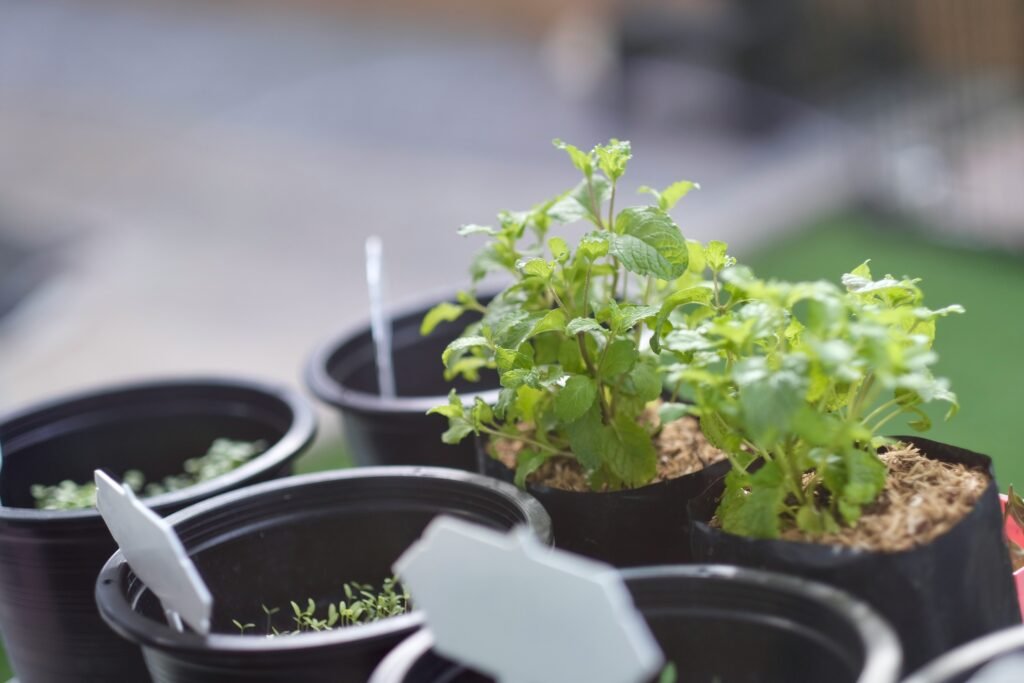
Step 4: Grow One Thing — Even Just One Pot
This step is not about food self-sufficiency. It is about understanding.
Growing one plant — one pot of herbs on a windowsill, one tomato plant on a balcony, one container of something edible — costs almost nothing and does something more valuable than the food it produces.
It connects you practically to how food actually works. How dependent it is on water, light, temperature, and timing. How much can go wrong between a seed and a meal. How much invisible infrastructure sits between a farm and your plate.
That understanding changes how you think about the food system and how you respond when prices rise or supply gets tight. It builds the beginning of a practical skill that scales if circumstances ever make further development worthwhile.
You do not need land. You do not need outdoor space. You need one pot and one decision to start.
Step 5: Learn One Food Preservation or Substitution Skill
This is the step most people skip — and the one that compounds most usefully over time.
Learning one food preservation method — basic pickling, drying herbs, storing grains properly — or one substitution skill — how to cook from basic staples when preferred ingredients are expensive or unavailable — is a practical capability that has value in both normal times and disrupted ones.
When grocery prices rise, knowing how to cook well from cheaper base ingredients is directly and immediately useful. When a specific food becomes expensive or scarce, knowing substitutes means the disruption affects you less than it affects someone with no flexibility.
When the big chain grocery stores are raising prices, local markets, bulk stores, and seasonal buying all become more relevant. Knowing how to use what is available rather than only what is preferred is a skill that costs nothing to develop and pays back consistently.
You do not need to master multiple techniques. One skill you actually use is worth infinitely more than ten techniques you learned about and never applied.
Why Most People Do Not Do This Until It Is Too Late
There are three simple reasons most people never act on how to prepare for rising prices and shortages until the disruption is already affecting them.
- It feels distant. If the supermarket is stocked today the risk feels abstract — even when the grocery bill is already telling a different story.
- It feels slow. People are not naturally good at preparing for problems that grow gradually over months rather than arriving suddenly overnight.
- It feels too big. Many people feel that individual action cannot matter against problems at global scale — and so they do nothing at all.
But this misses the point entirely.
How to prepare for rising prices and shortages is not about solving the global food system, fixing climate change, or becoming self-sufficient. It is about being slightly less personally vulnerable when global problems reach your household. That is a completely different and completely achievable goal — for ordinary people, in ordinary homes, at ordinary income levels, anywhere in the world.
Unprepared vs Prepared for Rising Prices and Shortages
| Unprepared for Rising Prices and Shortages | Prepared for Rising Prices and Shortages |
|---|---|
| Food price spike hits household budget immediately and fully | Food buffer absorbs short-term price spikes without panic |
| Water supply disruption creates immediate household crisis | Emergency water storage provides a practical short-term buffer |
| Power cut stops essential functions with no backup at all | Basic backup thinking keeps essential needs manageable |
| Specific food unavailable — no idea what to substitute | One substitution skill means disruption causes inconvenience not crisis |
| Supply chain disruption triggers immediate panic buying | Home buffer removes urgency from most short-term disruptions |
| Rising prices force immediate lifestyle cuts with no buffer | Buffer and basic skills reduce ongoing vulnerability to price stress |
| No understanding of how water food and energy connect | Basic system awareness enables better decisions under any pressure |
| Assumes today’s prices and supply reliability continue forever | Builds for variation from normal — not only for the normal |
Frequently Asked Questions: How to Prepare for Rising Prices and Shortages
Q: Does preparing for rising prices and shortages mean I think the world is ending?
No. It means acknowledging that food prices rise, water supplies get stressed, and energy systems fail sometimes — all of which are documented regular occurrences, not exceptional ones. Preparation is not doom thinking. It is the same practical logic as having car insurance — not because you expect a crash every day, but because crashes happen and being unprepared makes them catastrophically worse.
Q: Where do I start if I have very little money?
Start with the food buffer — it is the cheapest and most immediately practical step. Buy slightly more of what you already eat this week and store it at home. Store some water in clean sealed containers. Both of these cost almost nothing and require no special equipment. Knowledge is also free — understanding where your water comes from and what you would do in a power cut costs nothing.
Q: Is this relevant for people who live in cities with no outdoor space?
Yes. Four of the five steps — food buffer, water storage, energy awareness, and learning one substitution skill — are completely practical in an urban apartment with no outdoor space. Growing one thing can be done in a single pot on a windowsill. None of these steps require land, a garden, or rural living.
Q: How much food should I store to start?
Start with a 72-hour emergency supply of non-perishable foods your household already eats. Then build toward a seven-day supply. After that, a two to four week buffer provides meaningful resilience against most short-term supply disruptions and price spikes. Build gradually week by week rather than all at once.
Q: How does learning to cook from basic ingredients help with rising prices specifically?
Directly and immediately. When prices rise, the foods that rise most sharply are usually processed, imported, or out-of-season items. The person who knows how to cook well from basic staples — grains, legumes, seasonal vegetables, eggs — has significantly more flexibility than someone who can only cook from a narrow list of specific ingredients. Flexibility is resilience at the household budget level.
Q: Is this preparation only relevant for people in developing countries?
No. Rising food prices, water supply stress, and energy disruptions have affected wealthy and developing economies alike in recent years. The 2022 food price shock from supply route disruptions hit global markets. Water stress has occurred in South Africa, India, Turkey, and parts of Southern Europe. Energy price volatility affected the United Kingdom and much of Europe in 2022 and 2023. System stress is a universal phenomenon — the preparation steps are universally applicable.
Conclusion
How to prepare for rising prices and shortages is not about extremes. It is about five simple steps that make you slightly less vulnerable when systems you currently depend on completely start showing stress — as they already are. A food buffer. Some stored water. Basic energy thinking. One growing thing. One practical skill. None of it is dramatic. All of it is useful. Start with one step this week. That is enough to begin.