



What to Do Before the Next Crisis Hits — And Why Most People Only Start Thinking About It After It Arrives
The world gave everyone a test in 2020.
Most people did not handle it well.
Not because they were unintelligent. Not because they did not care. But because they had spent their whole lives inside systems that usually handled everything for them. When those systems stopped working properly they found out how little they had built for themselves.
Shelves went empty. Borders closed. Cities locked down. Supply chains broke. Jobs disappeared overnight. Hospitals became overwhelmed. Governments made decisions in real time — often without clear answers.
Then, as soon as the danger began to fade, most people went straight back to the same habits.
That is the real lesson. Not just about COVID. About what people do — and fail to do — when life becomes unstable.
Understanding what to do before the next crisis hits is not about predicting which disaster comes next. It is about recognizing the pattern every crisis in history reveals — and building accordingly while there is still time to build.
What Crisis Actually Reveals — And Why It Matters
Crisis does not create most problems. It reveals the ones that were already there.
A normal life can hide weakness for a long time. A steady paycheck can hide financial dependence. A smooth supply chain can hide fragility. A comfortable routine can hide the fact that a person has no backup plan at all.
When pressure arrives the truth shows up fast. That is why crisis matters — it strips away illusion and shows you exactly what was always underneath.
Sound personal financial planning requires preparing not only for normal future events but also for variation from whatever we consider normal. We cannot eliminate all downside risk — but our plans should build in some element of resilience and protection.
Understanding what to do before the next crisis hits starts with accepting one uncomfortable truth. Disruption is not rare. It is a normal part of life. The mistake is not being surprised once. The mistake is learning nothing from being surprised and remaining equally vulnerable to the next disruption already forming somewhere.
Why Modern Systems Make Us Less Prepared Than We Feel
Modern systems are built for efficiency. That sounds good — less waste, lower cost, faster delivery.
But efficiency and resilience are not the same thing.
A system built only for normal times can fail badly when conditions change. No backup stock. No alternate supplier. No spare capacity. No room for error. A small shock creates a very large problem very quickly.
That is exactly what millions of people discovered in 2020. The global supply chain was extraordinarily efficient. It was not robust. One significant disruption exposed how much of daily life depended on everything functioning perfectly at the same time.
A system that works well in calm weather may fail completely in a storm. Knowing what to do before the next crisis hits means building for the storm — not only for the calm.
6 Brutal Lessons Every Crisis Teaches About What to Do Before the Next One Hits
Lesson 1: Single Dependence Is the Hidden Risk Nobody Talks About Until It Is Too Late
One income can disappear. One employer can collapse. One currency can weaken. One supply line can break. One platform can change its rules overnight. One country can become unstable.
When your whole life depends on one thing you are more exposed than you feel on any ordinary Tuesday.
The person with only one income is fragile. The person with multiple ways to earn has breathing room. The person with no savings buffer gets hit immediately. The person with a buffer has time to think and act.
In a crisis choices matter more than almost anything else. And choices only exist when you have alternatives.
What to do before the next crisis hits — at the most basic level — is deliberately reduce single dependence before dependence becomes a trap you cannot exit quickly enough.
Lesson 2: Supply Chains Can Break Faster Than Anyone Expects
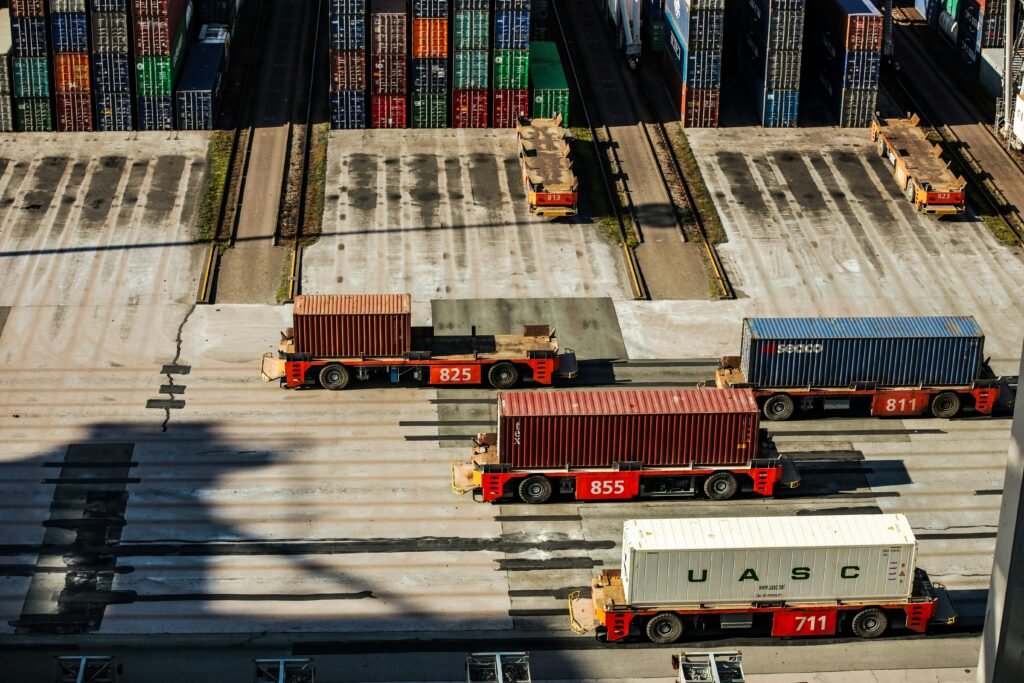
People who had never thought about logistics discovered in 2020 how quickly essential goods can become hard to find. The global system was efficient — but not always robust.
The lesson is not to stockpile endlessly or prepare for extreme scenarios. The lesson is simpler than that. A few weeks of food, water, medicine, and essentials is not paranoia. It is simply being slightly less dependent on immediate conditions remaining perfect.
People who had basic emergency supplies were not being dramatic. They were less vulnerable when the normal system briefly stopped working. That is a completely reasonable and practical part of what to do before the next crisis hits — without overreacting or overspending.
Lesson 3: Digital Skills Create Flexibility That Physical Presence Cannot
Jobs that required physical presence were hit hardest in 2020. Remote work became necessary almost overnight in places that had resisted it for years. People with digital skills or online income had significantly more flexibility than people without them.
This is not a COVID-specific observation. It appears in economic disruptions, conflicts, and instability of every kind. The person whose income requires physical presence in a specific location is more exposed than the person whose income can function from anywhere with a device and a connection.
What to do before the next crisis hits financially includes building at least one income stream that is not tied to physical presence, one employer, or one location. Digital skills and online income are not luxuries. They are resilience infrastructure for anyone serious about preparation.
Lesson 4: Community Is a Resource Money Cannot Fully Replace
People with real neighbors, family ties, and trusted relationships often handled disruption significantly better than financially better-off people who were socially isolated.
Community provides practical support, shared information, emotional stability, and mutual aid that isolated individuals cannot buy with money alone. The person who knows their neighbors before a crisis has access to a resource that cannot be assembled quickly during one.
Community is one of the most underrated answers to what to do before the next crisis hits. It costs nothing to build. It requires only consistent presence and showing up for others before you need something in return.

Lesson 5: Economic Instability Can Destroy Apparent Security Very Quickly
Countries like Lebanon, Venezuela, Sri Lanka, and Argentina have shown what happens when money stops holding its value or when basic economic systems begin to fail.
Building a financial safety net is essential for protecting yourself against economic uncertainty — including establishing an emergency fund, diversifying income sources, reducing debt, and investing in tangible assets.
People who seemed financially secure lost purchasing power very quickly. Savings weakened. Imports became expensive. A good job in a weak currency still left people trapped.
The lesson is not that every economy will collapse. The lesson is that one form of security is not enough. If everything you own and earn depends on one unstable system — one currency, one employer, one industry, one country’s economic health — your safety is weaker than it appears from the outside.
What to do before the next crisis hits economically means spreading security across multiple forms — skills, assets in stable currencies, parallel income streams, and savings outside a single system.
Lesson 6: Most People Return to Exactly the Same Habits After Every Disruption
This is the most important and most ignored lesson about what to do before the next crisis hits.
Most people returned to normal as soon as they could after 2020. Back to spending without buffers. Back to single income dependence. Back to social isolation. Back to assuming the disruption was a once-in-a-lifetime event that would not repeat.
That is understandable. People want stability. They want life to feel predictable. They want to believe the difficult period is over.
But disruption is not rare. It is part of life. The mistake is not being caught off guard once. The mistake is learning nothing from being caught off guard and remaining equally vulnerable to the next disruption already forming somewhere.
History keeps giving the same lesson. Most people ignore it. The ones who do not are the ones who were already building when the next crisis arrived.
What Resilience Actually Means — And What It Does Not
Resilience is not fearlessness. It is not preparing for every conceivable disaster. It is not living in a state of constant anxiety about what comes next.
It is the ability to keep functioning when things go wrong.
That means having some money saved. Some skill that can be sold. Some way to earn that is not tied to one place or one employer. Some basic supplies for temporary disruption. Some people you can actually rely on. Some mental clarity to keep thinking under pressure.
None of that is exotic. None of it requires significant wealth to begin. It just requires honesty about the gap between how prepared you currently are and how prepared you would need to be if something significant changed tomorrow.
Unprepared vs Prepared — What to Do Before the Next Crisis Hits
| Unprepared When Crisis Hits | Prepared Before Crisis Hits |
|---|---|
| One income — disappears completely if lost | Multiple income streams — one loss does not stop everything |
| No savings buffer — crisis hits immediately and fully | Emergency buffer — breathing room when income pauses |
| Income tied to one physical location only | At least one income stream works from anywhere |
| No community — isolated when disruption arrives | Real relationships built before they are urgently needed |
| All security in one currency and one system | Security spread across skills assets and multiple income types |
| Crisis arrives — no options available | Crisis arrives — multiple options remain available |
| Returns to exact same habits after every disruption | Uses each disruption to identify and fix real vulnerabilities |
| Assumes tomorrow will look exactly like today | Builds for disruption before it arrives — not during it |
What to Do Before the Next Crisis Hits — Starting From Where You Are Right Now
You do not need to prepare for every possible scenario. You just need to stop living as if nothing will ever shake the system you depend on.
Even one month of essential expenses saved separately changes your options dramatically when something unexpected happens. Start here before anything else.
Single employer, single salary, single currency dependence is the most common and most dangerous vulnerability most people carry. Even one small parallel income stream changes the equation significantly.
A skill that solves an expensive problem for real people is the most portable form of security available. It travels with you across industries, borders, and economic conditions.
Digital income, digital skills, and digital products are not limited by geography, physical presence, or one country’s economic conditions.
- Know your neighbors and strengthen real relationships.
Community is a resilience resource that money cannot fully replace. Build it before you need it urgently — because you cannot build it quickly during a crisis.
- Keep your life simple enough that it can bend without breaking.
The more complex and expensive your baseline requirements, the more vulnerable you are to any disruption. Simplicity is one of the most underrated resilience strategies available.
Frequently Asked Questions: What to Do Before the Next Crisis Hits
Q: Does thinking about what to do before the next crisis hits mean expecting the worst?
No. It means acknowledging that disruption is a normal part of life — not an exceptional event — and building accordingly. Expecting disruption is not pessimism. It is pattern recognition based on documented history. The goal is not fear. It is options. Prepared people have more options when disruption arrives.
Q: How much savings do I actually need before a crisis hits?
Start with one month of essential expenses saved separately from your regular spending. That alone significantly changes your options in most short-term disruptions. Three to six months is the commonly referenced target for genuine resilience. But one month saved today is infinitely more useful than six months planned for the future.
Q: Is this only relevant for people in economically unstable countries?
No. COVID affected every country regardless of wealth or stability. The 2008 financial crisis affected every economy. Energy crises, supply chain disruptions, and political instability have all touched wealthy and developing economies alike. Dependence on fragile single systems is a universal vulnerability — not a developing world problem specifically.
Q: What is the single most important thing to do before the next crisis hits?
Build a parallel income stream. A savings buffer protects you for weeks or months. A parallel income stream protects you indefinitely. It is the difference between a crisis being temporary and a crisis being permanent. Start with one small additional income source before anything else.
Q: How do I prepare when I am already living paycheck to paycheck?
Start with the smallest possible action that reduces vulnerability. Even saving the equivalent of one day’s income per month builds a buffer over time. Even learning one additional marketable skill builds optionality. The goal is not to solve everything immediately. It is to be slightly less dependent than you were last month — consistently, over time.
Q: Why do most people fail to prepare even after experiencing a crisis?
Because the human instinct after disruption is to return to normalcy as quickly as possible. The discomfort of crisis makes people want to forget it rather than learn from it. This is normal psychology — but it is also why the same vulnerabilities repeat across every generation. The people who prepare are not smarter. They are simply willing to stay uncomfortable long enough to act on what the crisis revealed.
Conclusion
What to do before the next crisis hits is not complicated. It is just uncomfortable — because it requires acting before the urgency feels real. Crisis removes options. Preparation preserves them. The people who do best are not always the wealthiest or the most connected. They are the ones who built before life demanded it. History keeps giving the same lesson. Most people ignore it. Build anyway.